

Sustainability · 2025
In this section52 topics
- Sustainability Policy3 items
- Sustainability Goals & UN SDGs4 items
- Policy Review4 items
- Business Value Chain2 items
- Stakeholder Analysis2 items
- Environmental Sustainability — Overview1 item
- Environmental Policy & Guidelines4 items
- Environmental Policy Review1 item
- Energy — Plan & Guidelines3 items
- Energy — Electricity Consumption1 item
- Energy — Fuel Consumption1 item
- Energy — Targets2 items
- Energy — Performance & Outcomes2 items
- Water — Plan & Guidelines2 items
- Water — Withdrawal, Discharge & Consumption1 item
- Water — Targets2 items
- Water — Performance & Outcomes2 items
- Waste — Plan & Guidelines2 items
- Waste — Generation, Disposal & Recycling1 item
- Waste — Targets2 items
- Waste — Performance & Outcomes2 items
- GHG — Plan & Guidelines2 items
- GHG — Emissions1 item
- GHG — Emissions Verification3 items
- GHG — Principles & Standards1 item
- GHG — Targets1 item
- GHG Targets — Net Zero1 item
- GHG Targets — Carbon Neutrality1 item
- GHG — Performance & Outcomes2 items
- Environmental Legal Incidents1 item
- Other Environmental Management1 item
- Social Policy & Guidelines3 items
- Social Policy Review1 item
- Social — Principles & Standards Practised1 item
- Human Rights Due Diligence2 items
- Employees — Plan & Guidelines3 items
- Employees — Workforce1 item
- Employees — Remuneration & Provident Fund1 item
- Employees — Training & Development1 item
- Employees — Occupational Health & Safety1 item
- Employees — Labour Relations1 item
- Employees — Employee Representation2 items
- Employees — Targets2 items
- Employees — Performance & Outcomes2 items
- Customers — Plan & Guidelines3 items
- Customers — Satisfaction Results1 item
- Customers — Targets2 items
- Customers — Performance & Outcomes2 items
- Community & Social — Plan & Guidelines3 items
- Community & Social — Targets2 items
- Community & Social — Performance & Outcomes2 items
- Law Violation Incidents1 item
Sustainability Policy
Has a Sustainability Policy
Yes
Policy Description
Sea Oil Public Company Limited and its subsidiaries (the “Group”) are committed to conducting business in line with the sustainable development approach under the principles of good corporate governance. The Group operates with responsibility toward society and the environment, taking into account the impacts on all stakeholder groups and striving to create balance throughout the business value chain across the economic, social, and environmental dimensions, in order to create long-term value and advance the organization toward sustainable growth, in alignment with the Company’s vision and mission. “ Striving to be a leading petroleum organization for a sustainable society. ”
The Board of Directors recognizes the importance of responsible business conduct and long-term value creation for all stakeholder groups. The Board is committed to driving the organization toward sustainable growth through the integration of environmental, social, and governance (Environmental, Social and Governance: ESG) considerations into the Company’s business strategy, risk management processes, and business decision-making (ESG Integration). To ensure effective sustainability governance and management, the Board of Directors has therefore established a clear governance structure to oversee, monitor, and support the Company’s operations in accordance with the principles of good corporate governance, transparency, and high standards of corporate governance, thereby leading to the sustainable growth of the organization.
Policy Document Link
https://www.seaoilthailand.com/storage/content/corporate-governance/corporate-policies-documents/20260302-seaoil-sustainable-development-policy-th.pdf
Sustainability Goals & UN SDGs
Introduction
The Company has established sustainability goals at the strategic level to drive long-term growth, with the aim of becoming an organization that maintains an appropriate balance between business performance and responsibility toward society and the environment, under an operating approach grounded in transparency and good corporate governance.
The Company places importance on driving the organization toward Carbon Neutrality and Net Zero greenhouse gas emissions, while integrating ESG principles into all business processes and investment decisions in order to strengthen its competitive capability and create sustainable value for all stakeholder groups.
Has Sustainability Goals
Yes
Goals Description
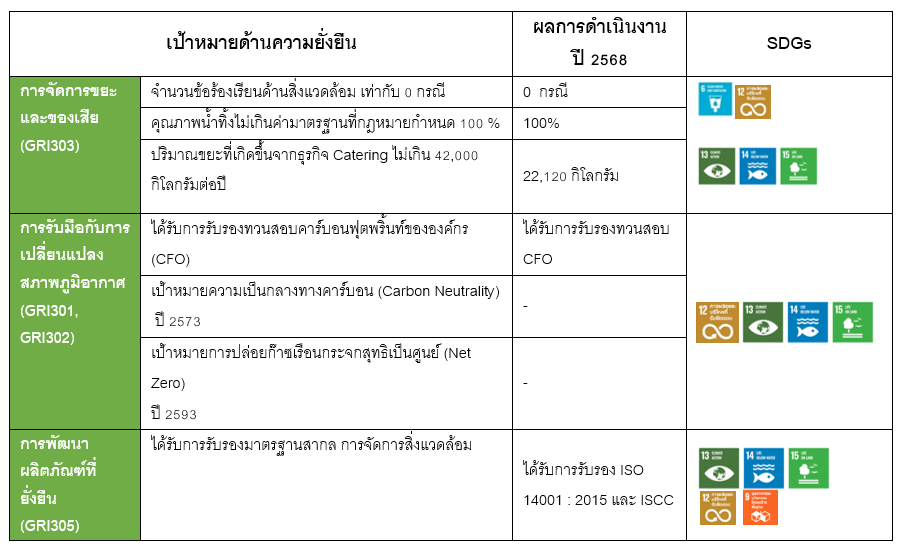
The Company has established sustainability goals covering key material topics under three principal dimensions, as follows:
Environmental Dimension
Climate Change
The Company aims to support the government’s policy on greenhouse gas emissions reduction and the promotion of a low-carbon economy. It has set a target to continuously reduce greenhouse gas emissions from its operations, in parallel with enhancing the efficient management of energy and resources, as well as adopting environmentally friendly technologies, with the objective of achieving Net Zero Emissions by 2050.Loss&Waste Management
The Company places importance on systematic waste management, with emphasis on waste reduction at source, segregation, reuse, and disposal in compliance with applicable laws and technical standards, under the 3Rs approach (Reduce, Reuse, Recycle). The Company also supervises waste disposal contractors to ensure compliance with relevant standards. It has set a target for 100% of waste to be managed properly and seeks to continuously increase the rate of waste recovery and utilization.Development and Procurement of Sustainable Products
The Company has a policy to support and promote the use of environmentally friendly products, as well as to foster collaboration with business partners in developing innovative environmentally friendly products for the marine transportation industry.
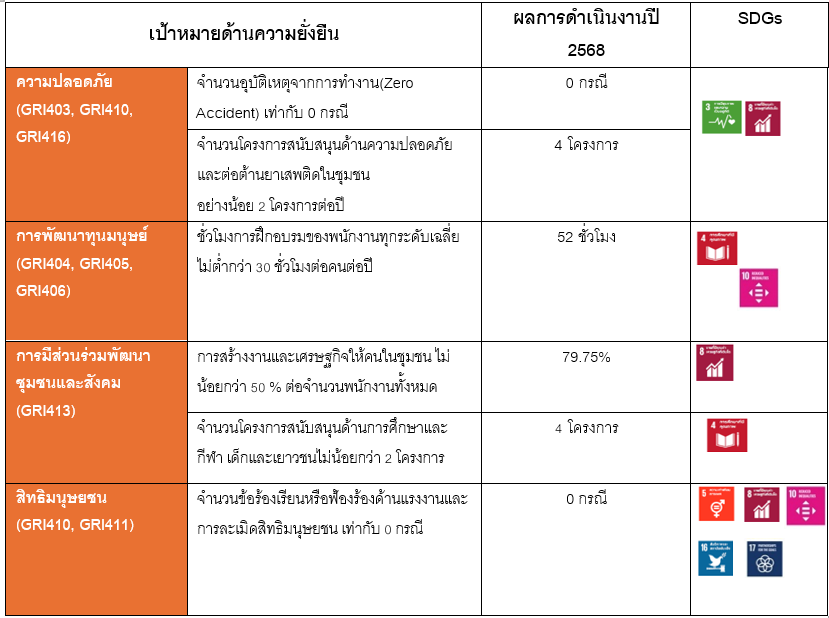
Social Dimension
Safety and Stakeholder Confidence
The Company places the highest priority on operational safety, with a target of zero work-related accidents (Zero Accident) and no significant oil spill incidents. At the same time, it continuously enhances employees’ safety capabilities, improves service quality, and fosters good relationships with communities in order to strengthen stakeholder confidence and promote sustainable mutual growth.Human Rights and Fair Labor Practices
The Company places importance on employee capability development and employee engagement. In addition, the Company respects human rights and treats workers fairly in accordance with the law and international standards. It does not tolerate discrimination, forced labor, or child labor, and promotes a safe working environment that respects human dignity. The Company requires 100% of employees to complete training on human rights and the Code of Conduct, with no significant cases of violation. It also continuously extends such standards to its business partners through ESG assessments in order to establish responsible operating standards throughout the value chain.Community Engagement
The Company is committed to creating value for society by enhancing quality of life, generating employment opportunities, and encouraging local participation. It allocates an appropriate budget to support social activities in order to strengthen the local economy and promote mutual long-term growth.
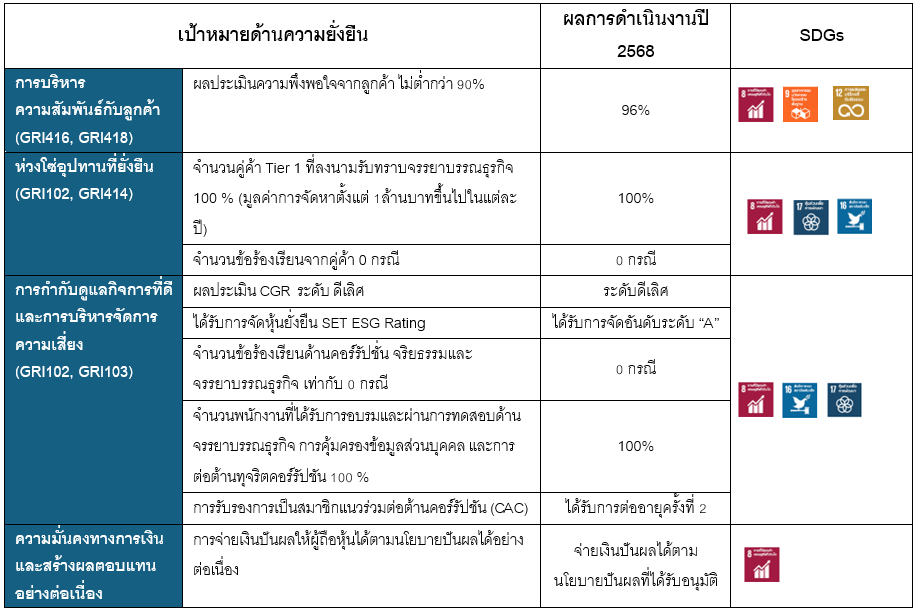
Economic and Governance Dimension
The Company aims to maintain financial stability and achieve continuous growth in operating performance, alongside good corporate governance that is transparent and auditable. It is committed to continuously enhancing corporate governance standards and strictly adhering to its anti-corruption policy, with a target of zero cases. The Company also places importance on maintaining service quality and standards, as well as developing innovation and technology to improve operational efficiency. In addition, it promotes responsible supply chain management by integrating ESG principles throughout its processes in order to build stakeholder confidence and support sustainable long-term growth.
UN Sustainable Development Goals
| SDG Goal |
|---|
| Goal 3 Good Health and Well-being |
| Goal 4 Quality Education |
| Goal 5 Gender Equality |
| Goal 8 Decent Work and Economic Growth |
| Goal 9 Industry, Innovation and Infrastructure |
| Goal 10 Reduce Inequalities |
| Goal 11 Sustainable Cities and Communities |
| Goal 12 Responsible Consumption and Production |
| Goal 13 Climate Action |
| Goal 16 Peace, Justice and Strong Institutions |
| Goal 17 Partnerships for the Goals |
Policy Review
Introduction
The Group conducts an analysis and review of material sustainability topics at least once a year, or whenever significant changes arise, in order to prioritize issues that may affect the business throughout the value chain. The results are used to formulate strategies, targets, and action plans in alignment with the economic, social, and environmental context, with progress regularly monitored and reported to the Board of Directors or the designated committee.
The Nomination, Remuneration, Corporate Governance and Sustainable Development Committee, together with the management team, has reviewed and enhanced the sustainability framework to ensure comprehensive coverage across all dimensions, namely the economic and governance, social, and environmental dimensions. This framework is aligned with the United Nations Sustainable Development Goals (Sustainable Development Goals: SDGs), with clear strategies, indicators, and implementation guidelines established to drive the organization toward its sustainability goals in a concrete and continuous manner.
Policy Reviewed This Year
Yes
Policy Changed This Year
Yes
Review Details
In 2025, the Company enhanced and strengthened its sustainability policies and targets, with a focus on the following key areas:
Carbon Neutrality and Net Zero Emissions Targets
In line with the direction of the industry, the Company reviewed and refined its sustainability targets by establishing Carbon Neutrality and Net Zero Emissions targets that are more appropriate and better aligned with its business context.
Enhancement of Corporate Governance
The Company established an Anti-Money Laundering and Counter-Financing of Terrorism Policy (AML/CFT) to strengthen its internal control system and legal compliance, while also protecting stakeholders in the social dimension. This contributes to building confidence and stability for both the organization and the overall economic system. In addition, the Company improved its complaint-handling policy in order to expand channels for receiving complaints and suggestions.
Business Value Chain
Introduction
The Company has conducted a business value chain analysis to identify and assess sustainability impacts, risks, and opportunities that may arise across each of its key activities, from raw material procurement, operations, and distribution to customer service, in order to establish appropriate, comprehensive, and well-aligned management approaches in accordance with the principles of sustainable business practices.
Such analysis supports the integration of environmental, social, and governance (ESG) considerations into the Company’s operations throughout the value chain, thereby contributing to the mitigation of negative impacts and the creation of long-term value for stakeholders.
Value Chain Description
Oil Trading
The business focuses on sourcing fuel from quality and diversified suppliers, while ensuring safety and quality throughout the transportation and delivery process to achieve timely delivery. It also develops distribution channels through both land and marine transportation, sets appropriate and transparent prices, and is supported by a team of experienced sales professionals. In addition, the Company places importance on customer service, complaint handling, and the continuous assessment of customer satisfaction.
Catering & Supply Management
The business carefully selects quality raw materials and suppliers, while supporting communities and the environment. It maintains cleanliness and safety standards at every stage, ensures timely delivery of products and services, and creates nutritional value for customers. The business is supported by skilled personnel, applies fair pricing, and places importance on customer satisfaction and health.
Stakeholder Analysis
Introduction
The Company recognizes the importance of stakeholder engagement throughout the business value chain as part of its social sustainability objectives, particularly in promoting human rights by providing opportunities for stakeholders to freely express their views, and in using such input to analyze issues material to the organization’s sustainability development. The Company has therefore established the following stakeholder engagement process:
Identify stakeholder groups that are directly and indirectly affected by the Company’s business operations.
Assess both the positive and negative impacts, as well as the expectations, of each stakeholder group.
Prioritize affected stakeholder groups through risk assessment.
Provide communication channels to receive suggestions and complaints from all stakeholder groups, both internal and external, such as service satisfaction surveys, complaint channels via mail, email, or the Company’s website, and meetings with customers to gather feedback or service-related issues for further improvement and greater efficiency.
Assign responsible persons to address material issues or handle complaints.
Monitor performance and the implementation of corrective actions for issues that arise.
Stakeholder Analysis
| Stakeholder Type | Stakeholders | Stakeholder Expectations | Response to Expectations | Communication Activities |
|---|---|---|---|---|
| Internal stakeholders | 2913 · Description: Shareholders | 1. Business growth and long-term value creation
2. Strong operating performance and consistent dividend payments
3. Transparency in business operations
4. The provision of opportunities for shareholders to exercise their entitled rights | 1. Conduct business with transparency, ethics, and good corporate governance.
2. Maintain financial stability and deliver consistently strong operating performance.
| 2941 · Description: Online Communication · 2944 · Description: Annual General Meeting (AGM) · 2949 · Other name: Opportunity Day · Description: Others |
| Internal stakeholders | 2921 · Description: Employees | 1. Fair compensation and benefits
2. A safe working environment
3. Capability development
4. Career growth and advancement
| 1. Establish policies for personnel development and provide appropriate and fair compensation and benefits.
2. Maintain a working environment that is safe for life and property in accordance with the QSSHE Policy.
3. Respect human rights and ensure equal and fair treatment of workers.
4. Organize Happy Workplace activities.
5. Provide training programs to enhance both hard skills and soft skills.
| 2942 · Description: Internal Meeting · 2945 · Description: Complaint Reception · 2946 · Description: Employee Engagement Survey · 2947 · Description: Satisfaction Survey · 2948 · Description: Training / Seminar |
| External stakeholders | 2923 · Description: Customers | 1. A diverse range of quality products, with timely delivery and complete quantities
2. Prompt and efficient service
3. Safety, occupational health, and environmental impact management
4. Protection of customer data | 1. Enhance product diversity.
2. Maintain product quality and improve service standards, while promoting the development of innovation and new technologies.
3. Adhere to service standards under ISO 9001:2015 and ISO 14001:2015.
4. Handle complaints promptly and effectively.
5. Implement a Personal Data Protection Policy and information security control measures in accordance with ISO 27001.
6. Comply with GMP, HACCP, and Food Safety Hygiene Practice standards.
| 2941 · Description: Online Communication · 2943 · Description: External Meeting · 2945 · Description: Complaint Reception · 2947 · Description: Satisfaction Survey |
| External stakeholders | 2899 · Description: Suppliers · 2900 · Description: Business partners · 2919 · Description: Subcontractors | 1. Transparent and fair supplier selection
2. Supplier development to foster sustainable mutual growth
| 1. Respect for human rights, equality, and non-discrimination
2. An efficient and transparent procurement system
3. Compliance with agreed terms and conditions
4. Communication of the Company’s quality, safety, occupational health and environmental policies, as well as its Code of Conduct, to suppliers for their acknowledgment and mutual adherence
| 2941 · Description: Online Communication · 2943 · Description: External Meeting · 2947 · Description: Satisfaction Survey · 2948 · Description: Training / Seminar |
| External stakeholders | 2902 · Description: Community · 2928 · Description: Society · 2931 · Description: Government agencies and Regulators | 1. Environmental impacts arising from operations, which may result from transportation, waste disposal, and other types of waste
2. Ethical business conduct and compliance with applicable laws and regulations
3. Climate change
| 1. Conduct business with fairness, in accordance with business ethics and the CSR policy.
2. Comply with the QSSHE Policy and ISO 14001:2015.
3. Listen to community opinions and suggestions.
4. Generate employment and support the local economy.
5. Support and promote youth education, among other initiatives.
6. Foster environmental awareness and preserve the important ecosystems of surrounding communities.
| 2938 · Description: Visit · 2940 · Description: Social Event · 2941 · Description: Online Communication · 2945 · Description: Complaint Reception · 2949 · Other name: Community surveys · Description: Others |
Environmental Sustainability — Overview
Operating Results — Introduction
The Group places importance on efficient energy utilization under its Quality, Safety, Occupational Health and Environmental Policy. It is committed to promoting the prudent use of resources, reducing unnecessary energy consumption, and continuously minimizing the environmental impacts arising from its business operations.
Environmental Policy & Guidelines
Introduction
The Company has established a Quality, Safety, Occupational Health and Environmental Policy, with a focus on risk management to protect the environment, the implementation of control measures to ensure that product transportation meets safety standards capable of preventing environmental impacts, as well as fostering awareness and participation in social responsibility and the efficient use of resources for maximum benefit. Guided by the organization’s safety and environmental direction as set out in such policy, executives and employees across all functions have become aware of, and cooperated in, establishing good practices, placing importance on compliance with environmental laws, customer requirements, stakeholder expectations, and international requirements. This has led to a systematic approach to operations, and in 2025 the Company obtained certification for its Environmental Management System (ISO 14001:2015). The Company continues to maintain this environmental management standard, with both internal and external audits conducted to ensure continuous improvement and development.
Disclosure Boundary
The disclosure is divided into two business groups: Oil Trading and Catering & Supply Management, with due consideration given primarily to operational locations. For the Oil Trading business, the disclosure covers the management of the head office. For the Catering business, the disclosure covers the management of the principal operating sites.
Has an Environmental Policy
Yes
Policy Description
Oil and Fuel Management
The Company places importance on the efficient use of fuel and on reducing environmental impacts. Energy conservation initiatives include planning fuel usage efficiently and minimizing leakage. The Company also monitors and analyzes fuel consumption data in order to improve operational efficiency.
Renewable / Clean Energy Management
The Company has adopted an approach toward the use of renewable energy by initiating the use of solar energy for outdoor lighting, such as traffic lights.
Water Resource Management
The Company places importance on efficient water use by implementing water reduction measures across all operational processes in order to reduce environmental impacts and support the sustainable use of water resources.
Waste Management
The Company places importance on systematic waste management, focusing on waste segregation at source and proper waste disposal control in accordance with environmental standards through agencies authorized by the government. The measures implemented by the Company include the following:
Waste segregation at source: Employees are required to separate waste by category, such as organic waste, recyclable waste, hazardous waste, and general waste, so that such waste can be properly disposed of or recycled.
Installation of segregated waste bins: Clearly labeled waste bins are installed in work areas, and employees are educated on proper waste disposal methods.
Waste disposal by authorized entities: Waste and non-reusable materials are sent for disposal by organizations or agencies certified by the government to ensure that disposal complies with environmental standards and legal requirements.
Reduction of landfill waste: The Company supports recycling and the reuse of waste, such as using reusable packaging materials, reducing the use of materials that generate plastic waste, and promoting environmentally friendly products.
Biodiversity Management
The Company has adopted guidelines for biodiversity conservation by minimizing the impact of its business operations on ecosystems, supporting reforestation and natural resource restoration projects, and collaborating with environmental organizations to protect ecosystems and living organisms in operational areas.
Greenhouse Gas Management and Climate Change
The Company monitors and reduces greenhouse gas emissions by improving production processes to reduce energy consumption, shifting to clean energy, and participating in carbon footprint reduction initiatives to support its Carbon Neutrality target.
Air Quality Management
The Company places importance on maintaining air quality both in operational areas and surrounding communities. It regularly monitors and measures total dust levels on an annual basis to ensure that dust concentrations remain within safe levels in accordance with applicable environmental standards. The Company has installed dust monitoring instruments and equipment in various high-risk areas, including areas surrounding its operations, to enable detailed year-round surveillance and monitoring. The monitoring results are analyzed and reported annually to the relevant authorities.
Noise Pollution Management
The Company places importance on controlling and managing noise pollution in both operational areas and surrounding communities by regularly monitoring and measuring noise levels on an annual basis. This is to ensure that noise generated from production processes and various activities does not exceed prescribed standards and does not adversely affect the health of employees or nearby communities. Noise measurements are conducted in all operational areas that may generate noise pollution, such as heavy machinery areas and areas adjacent to communities. The results are recorded and analyzed in order to assess risks and identify improvement measures. If noise levels are found to exceed the standard threshold, the Company will install noise reduction equipment or improve production processes to reduce noise pollution appropriately.
Oil Delivery Supervision
The Company has assigned personnel to supervise oil deliveries in order to ensure that the oil delivery process meets required standards in terms of quality, complete quantity, and safety throughout transportation. Preventive measures are in place to avoid oil leakage during transport, including inspections of transport trucks, vessels, and related equipment, as well as emergency response drills in the event of accidents during delivery, so as to prevent impacts on communities, the environment, and stakeholders in all sectors.
Environmental Guidelines
| Guideline |
|---|
| Electricity Management |
| Fuel Management |
| Renewable/Clean Energy Management |
| Water Management |
| Waste Management |
| Biodiversity Management |
| Greenhouse Gas and Climate Change Management |
| Air Quality Management |
| Noise Pollution Management |
Environmental Policy Review
Policy Reviewed This Year
Yes
Energy — Plan & Guidelines
Has an Energy Management Plan
Yes
Plan Description
In 2025, the Company implemented energy and resource conservation initiatives by establishing measures to control and reduce energy consumption in its key operational activities. These covered electricity usage in offices, fuel consumption of the Company’s cars and vehicles, as well as paper usage in operational processes, in order to support the efficient use of resources and reduce waste generated from operations.
Plan Document Link
https://www.seaoilthailand.com/th/downloads/sd-report
Energy — Electricity Consumption
Electricity Consumption
| Metric | Current Year | Previous Year | Two Years Ago |
|---|---|---|---|
| Total electricity consumption within the organization (Kilowatt-Hours) | 231,737 | 235,411 | 310,485 |
| Electricity purchased for consumption from non-renewable energy sources (Kilowatt-Hours) | 231,737 | 235,411 | 310,485 |
| Electricity purchased or generated for consumption from renewable energy sources (Kilowatt-Hours) |
Energy — Fuel Consumption
Fuel Consumption
| Metric | Current Year | Previous Year | Two Years Ago |
|---|---|---|---|
| Jet fuel (Litres) | |||
| Diesel (Litres) | 4,085 | 4,103 | 3,748 |
| Gasoline (Litres) | |||
| Fuel oil (Litres) | |||
| Crude oil (Barrels) | |||
| Natural gas (Standard cubic feet) | |||
| LPG (Kilograms) | |||
| Steam (Metric tonnes) | |||
| Coal (Metric tonnes) |
Energy — Targets
Has Set Targets
Yes
Targets
| Target | Base Year | Base Year Value | Target Year | Target Change (%) | Unit |
|---|---|---|---|---|---|
| Reduction of electricity purchased for consumption | 2,023 | 310,485 | 2,025 | 10 | Kilowatt-hour |
| Reduction of fuel consumption | 2,024 | 4,103 | 2,025 | 2 | Litres |
Energy — Performance & Outcomes
Has Performance Results
Yes
Performance Description
The Company has continuously implemented energy conservation measures by collecting and monitoring monthly electricity consumption data to analyze trends, compare performance, and determine appropriate approaches to improving energy efficiency. The Company has also established energy-saving measures by usage category, conducted ongoing surveys and improvements of electrical equipment to enhance efficiency, and regularly maintained such equipment to minimize energy loss.
In addition, the Company promotes employee participation through continuous energy-saving awareness campaigns and regular monitoring of electricity-use behavior across relevant departments. The Company also supports online meetings and work-from-home (WFH) arrangements, where appropriate, to help reduce electricity consumption in the office and minimize travel. These practices contribute to more efficient resource utilization and reduced environmental impacts.
Water — Plan & Guidelines
Has a Water Management Plan
Yes
Plan Description
The Company places importance on appropriate water management and efficient water use, taking into account the nature of operations across each business segment. For office areas, although water consumption at the headquarters is charged as part of the building’s management fee and separate water consumption data is therefore unavailable, the Company continues to promote employee awareness of efficient water use. This includes encouraging employees to turn off taps when not in use, refrain from disposing of waste or paper in toilets, and help monitor water-related equipment to ensure it remains in proper working condition. Any damage or malfunction identified is promptly reported for repair.
For operational sites where water is used in core processes, the Company has established careful planning and control measures to ensure water is used as efficiently as possible, while also maintaining water quality and monitoring potential wastewater impacts. The Company’s practices include grouping raw materials that can be cleaned together, planning area cleaning activities to reduce water use from washing and spraying, reusing water from certain processes for beneficial purposes such as watering plants, and appropriately planning the cleaning of equipment and operational areas. These measures support the efficient use of water resources and help reduce environmental impacts.
Water — Withdrawal, Discharge & Consumption
Water Withdrawal, Discharge & Consumption
| Metric | Current Year | Previous Year | Two Years Ago |
|---|---|---|---|
| Total water withdrawal (Cubic meters) | 116 | 101 | 142 |
| Total water withdrawal by third-party water (Cubic meters) | |||
| Total water withdrawal by surface water (Cubic meters) | |||
| Total water withdrawal by groundwater (Cubic meters) | |||
| Total water withdrawal by seawater (Cubic meters) | |||
| Total water withdrawal by produced water (Cubic meters) | |||
| Percentage of wastewater treated before discharge (%) | |||
| Total water discharge (Cubic meters) | |||
| Total water discharge to third-party water (Cubic meters) | |||
| Total water discharge to surface water (Cubic meters) | |||
| Total water discharge to groundwater (Cubic meters) | |||
| Total water discharge to seawater (Cubic meters) | |||
| Total water consumption (Cubic meters) | 116 | 101 | 142 |
| Recycled water (Cubic meters) |
Water — Targets
Has Set Targets
Yes
Targets
| Target | Base Year | Base Year Value | Target Year | Target Change (%) | Unit |
|---|---|---|---|---|---|
| Reduction of water withdrawal | 2,023 | 142 | 2,025 | 2 | Liter |
Water — Performance & Outcomes
Has Performance Results
Yes
Performance Description
The Company has implemented appropriate water management measures covering regular monitoring and recording of water consumption, inspection and maintenance of the water supply system, promotion of water-saving equipment, employee awareness campaigns on efficient water use, and ongoing evaluation to improve water-use efficiency. In addition, the Company places importance on controlling the quality of water used in its operations by regularly monitoring Total Dissolved Solids (TDS) levels to help prevent wastewater generation at the source. In 2025, the monitoring results indicated that water quality remained within the legal standards.
Waste — Plan & Guidelines
Has a Waste Management Plan
Yes
Plan Description
The Company places importance on the proper management of waste, waste materials, and pollution arising from its operations, covering general waste, recyclable waste, hazardous waste, and waste generated from specific operational processes. The Company has established guidelines for waste segregation, collection, source control, and disposal or transfer in compliance with applicable laws and relevant standards, while taking into account environmental impact reduction, efficient resource utilization, and stakeholder expectations.
For hazardous waste such as deteriorated oil, used cooking oil, and other hazardous waste generated from operations, the Company manages such waste through reliable and properly licensed external service providers to ensure that treatment, disposal, or reuse is carried out in accordance with legal requirements and sound technical practices. In addition, the Company continuously monitors and reviews waste disposal contractors and waste buyers in order to promote systematic, transparent, and environmentally responsible waste management.
Waste — Generation, Disposal & Recycling
Waste Generation, Disposal & Recycling
| Metric | Current Year | Previous Year | Two Years Ago | Remark |
|---|---|---|---|---|
| Total waste generated (Kilograms) | 37,379.9 | 46,293 | 48,998 | |
| Non-hazardous waste (Kilograms) | 36,869.9 | 45,763 | 48,348 | The Company is in the process of collecting data on municipal solid waste generated from its office operations. In the interim, the national average waste generation rate for 2024 (1.15 kg/person/day), as reported by the Pollution Control Department, is used as an estimation basis, based on 53 employees and 242 working days. |
| Non-hazardous waste - Landfilling (Kilograms) | ||||
| Non-hazardous waste - Incineration (with energy recovery) (Kilograms) | ||||
| Non-hazardous waste - Incineration (without energy recovery) (Kilograms) | ||||
| Non-hazardous waste - Other disposal operations (Kilograms) | ||||
| Hazardous waste (Kilograms) | 510 | 530 | 650 | |
| Hazardous waste - Landfilling (Kilograms) | ||||
| Hazardous waste - Incineration (with energy recovery) (Kilograms) | ||||
| Hazardous waste - Incineration (without energy recovery) (Kilograms) | ||||
| Hazardous waste - Other disposal operations (Kilograms) | ||||
| Total reused/recycled waste (Kilograms) | ||||
| Reused/Recycled non-hazardous waste (Kilograms) | ||||
| Reused non-hazardous waste (Kilograms) | ||||
| Recycled non-hazardous waste (Kilograms) | ||||
| Reused/Recycled hazardous waste (Kilograms) | ||||
| Reused hazardous waste (Kilograms) | ||||
| Recycled hazardous waste (Kilograms) |
Waste — Targets
Has Set Targets
Yes
Targets
| Waste Type | Disposal Approach | Target | Base Year | Base Year Value | Target Year | Target Change (%) | Unit |
|---|---|---|---|---|---|---|---|
| Non-hazardous waste | 2763 · Other name: Reduce waste generation and waste from operational processes. · Description: Other | Reduce waste volume | 2,024 | 46,293 | 2,025 | 5 | Kilograms |
Waste — Performance & Outcomes
Has Performance Results
Yes
Performance Description
In 2025, the Company was able to reduce its total waste volume by 8,913.10 kilograms compared to the previous year. In addition, 510 kilograms of hazardous waste generated from operations was properly managed and disposed of. G.T. General Co., Ltd. was engaged to collect used oil for lawful disposal and treatment in accordance with academic principles and without causing environmental impacts, as authorized by the Department of Industrial Works.
In addition, the Company promoted initiatives that support waste reuse and the transformation of waste into new products in line with the circular economy concept, including the following projects:
Trash to Product Project No. 1
This environmental initiative was aimed at reducing plastic waste by sending collected and sorted plastic bottles into the recycling process for conversion into clothing. The project encouraged employee participation in waste segregation and resource reuse. It also contributed to greenhouse gas emissions reduction and raised environmental awareness within the organization. A total of 786 plastic bottles were collected, resulting in a reduction of 63 kgCO2e.
Recycling Market Project
This initiative encouraged employees and local communities to participate in the segregation and collection of used plastic bottles, which could be exchanged for eggs as an incentive. The collected plastic bottles were then recycled into clothing, helping reduce waste and support the circular economy concept, while also contributing to greenhouse gas emissions reduction. Through this project, a total of 44,944 plastic bottles were collected, 2,996 shirts were produced, and greenhouse gas emissions were reduced by approximately 1,528.10 kgCO2e.
GHG — Plan & Guidelines
Has a GHG Management Plan
Yes
Plan Description
The Company recognizes that climate change and global warming are not solely environmental issues, but also have far-reaching implications for the economy, society, people’s quality of life, and the long-term sustainability of the business sector. For this reason, the Company places importance on conducting its business responsibly, while also preparing for related risks and potential impacts, and contributing in a tangible way to greenhouse gas emissions reduction.
The Company is fully aware that its business operations involve the use of natural resources and may result in both direct and indirect greenhouse gas emissions arising from various activities throughout the value chain. The Company therefore remains committed to managing such impacts prudently and continuously, beginning with the assessment of its organizational carbon footprint in order to gain a clear understanding of its sources of greenhouse gas emissions. The information obtained is then used as a basis for determining appropriate emissions reduction approaches that are aligned with the context of the business.
The assessment found that the Company’s significant greenhouse gas emission sources are primarily associated with Scope 3 activities. This reflects that the Company’s climate-related impacts do not arise solely from its internal operations, but are also linked to activities across the supply chain. Accordingly, the Company places importance on using such information to formulate plans and develop appropriate measures, in order to contribute to greenhouse gas emissions reduction and support the transition toward more sustainable business operations.
GHG — Emissions
GHG Emissions
| Metric | Previous Year | Two Years Ago | Remark |
|---|---|---|---|
| Total GHG emissions (Metric tonnes of carbon dioxide equivalent) | 115,362 | 37,017 | For the year 2025, the information is currently under verification. |
| Total greenhouse gas emissions 1 (Metric tonnes of carbon dioxide equivalent) | 213 | 230 | |
| Total greenhouse gas emissions 2 (Metric tonnes of carbon dioxide equivalent) | 104 | 21 | |
| Total greenhouse gas emissions 3 (Metric tonnes of carbon dioxide equivalent) | 115,045 | 36,766 |
GHG — Emissions Verification
Emissions Verified by a Third Party
Yes
Verifying Body
3181
Verification Document Link
https://eonemedia.setlink.set.or.th/report/1148/2025/1774827365188.pdf
GHG — Principles & Standards
Principles & Standards Applied
| Standard |
|---|
| 2671 |
GHG — Targets
Has Set GHG Targets
Yes
GHG Targets — Net Zero
Net Zero Targets
| Emission Scope | Base Year | Base Year Emissions | Near-term Target Year | Near-term Target Change (%) | Long-term Target Year | Long-term Target Change (%) | Target Year | Target Change (%) | Unit |
|---|---|---|---|---|---|---|---|---|---|
| 2716 | 2,024 | 115,359.64 | 2,030 | 30 | 2,050 | 100 | 2,030 | 30 | Metric tonnes of carbon dioxide equivalent |
GHG Targets — Carbon Neutrality
Carbon Neutrality Targets
| Emission Scope | Carbon Neutrality Certified | Base Year | Base Year Emissions | Target Year | Unit |
|---|---|---|---|---|---|
| 2715 | N | 2,024 | 317 | 2,030 | Metric tonnes of carbon dioxide equivalent |
GHG — Performance & Outcomes
Has Performance Results
Yes
Performance Description
In 2025, the Company expanded the scope of its greenhouse gas emissions verification to cover all business units, whereas previously it had been limited to the oil trading business. The assessment was based on the Company’s activity data for the period from 1 January to 31 December 2024, and the verification was completed on 26 November 2025.
The Company has designated 2024 as the base year for tracking, benchmarking, and evaluating its greenhouse gas emissions performance in subsequent years. The details are as follows:
Year | greenhouse gas emissions (tonCO2eq/year) | |||
Scope 1 | Scope 2 | Scope 3 | Total | |
2024 | 213 | 104 | 115,045 | 115,359.64 |
2023* | 230 | 21 | 36,766 | 37,017 |
*Only Oil Trading business.
Environmental Legal Incidents
Legal Violation Incidents
| Metric | Current Year | Previous Year | Two Years Ago |
|---|---|---|---|
| Number of cases or incidents of legal violations or negative environmental impact (cases) | 0 | 0 | 0 |
Other Environmental Management
Plan Description
Sustainable Procurement
The Company has established a procurement policy and guidelines for engagement with business partners, with a systematic, transparent, fair, and auditable process for the selection of suppliers, service providers, and subcontractors. In 2025, the Company further enhanced its procurement system to improve both efficiency and effectiveness by applying the principles of sustainable procurement as follows.
In 2025, the Company implemented sustainable procurement practices by integrating environmental and social considerations into its sourcing process in a systematic, transparent, and verifiable manner. The Company also promoted the selection of environmentally friendly products and materials, with the total value of green procurement amounting to THB 533,025.
On the social dimension, the Company places importance on procurement practices that respect human rights and uphold appropriate labor standards. The Company also organized Supplier Day to strengthen suppliers’ capabilities and promote sustainable growth together. In addition, the Company supported local employment totaling 189 workers, generating income for the community of THB 33.42 million.
Employees — Plan & Guidelines
Has an Employee Management Plan
Yes
Plan Description
Human Resource Management
Employee Development
The Company has always recognized the importance and value of its personnel, believing that every employee is a key factor in driving the business toward sustainable success in line with the organization’s vision and mission, while also serving as an indicator of the Company’s business competitiveness.
Accordingly, the Company has established a human resource management policy to demonstrate its commitment to building and developing the capabilities of personnel at all levels. This covers recruitment and hiring, compensation and welfare management, career advancement, as well as the provision of a safe working environment and a good quality of life. The Company also integrates compliance with its Code of Conduct into its personnel management and development processes. The key policies are as follows:
Recruitment and Hiring
The Company recruits personnel based on operational needs and job suitability, with workforce planning aligned appropriately with each business line. The Company places importance on selecting personnel based on knowledge, skills, competencies, experience, and qualifications that are suitable for each position, as well as a positive attitude, through a fair and transparent selection process. Recruitment opportunities for all positions are publicly announced through the Company’s website, social media, and all other available communication channels, in order to provide individuals from all sources with the opportunity to enter the Company’s recruitment process. The Company’s employees are categorized by employment type as follows:
Training and Employee Development
The Company has established plans to develop essential knowledge and skills at both the fundamental and professional levels through training, seminars, on-the-job learning, knowledge sharing among colleagues within the organization, as well as fostering innovation and sound ethics.
Succession Planning and Development
The Company has systematically implemented succession planning and development. A working team has been established to oversee the determination of qualifications for key positions in order to ensure that recruitment, selection, and development processes are conducted transparently before being proposed to the Nomination Committee for consideration and approval. Particular emphasis is placed on senior management positions, as well as roles that are critical and serve as key mechanisms in driving the organization. This also helps retain high-potential employees to support the Company’s continued growth.
Employee Motivation and Retention
The Company has improved various policies and practices to ensure that they remain up to date and effective in motivating and retaining high-quality employees, enabling them to work happily with the Company.
The Company conducts employee engagement surveys by using anonymous questionnaires so that employees can respond comfortably and honestly. The survey results are analyzed to strengthen employee engagement with the Company. Based on the analysis of survey results, the Company has enhanced employee benefits to ensure they are appropriate and aligned with employees’ feedback.
Additional benefits have been introduced to enhance employee well-being and better align with employee quality-of-life practices, such as birthday leave and work-from-home arrangements.
The Company has continuously implemented the Happy Workplace Program by introducing or adjusting activities to genuinely enhance the well-being of employees at all levels. The program includes sports activities, social contribution activities, activities designed to promote emotional well-being, and educational activities for employees. Satisfaction surveys are conducted throughout the year regarding such activities, and employees are also invited to propose new activities they would like to see, so that the Company can improve and tailor its initiatives to better meet employee needs.
For performance evaluation, the Company assesses both job achievement and employee competencies. Supervisors conduct employee evaluations every six months, with employees being informed of and mutually acknowledging the results, using work outcomes as key indicators. This is a two-way communication process that gives employees the opportunity to explain and better understand their own strengths and areas for improvement.
Regarding career advancement, the Company provides opportunities for employees who meet the criteria established by the Company in terms of knowledge, skills, capabilities, and good conduct to progress in their careers through promotion to positions appropriate to their qualifications, based on a transparent evaluation process.
Career Development
The Company places importance on the continuous development of employees’ career paths in accordance with the Company’s Training Matrix and position-based Training Road Map, which serve as guidelines for the development of all employees, including both high-performing employees and those whose performance has not yet met standards. Development plans are reviewed annually to ensure that the plans established by the Company effectively motivate employee growth.
Annual Performance Management and KPI Achievement Evaluation
The Company has established a performance management policy covering both competency and key performance indicator achievement to ensure that the performance of every position and every department is aligned with the Company’s objectives and goals. This enables employees to recognize the value of their work in contributing to the Company’s success. The process also encourages communication regarding performance between supervisors and subordinates, with supervisors providing feedback that leads to improved work capabilities, guidance on behaviors aligned with the Company’s culture, and the development of potential for career growth and advancement.
Building Corporate Culture and Participation in Social Activities
The Company promotes a strong corporate culture by encouraging participation, teamwork, and mutual trust, while instilling values of honesty and integrity, adherence to the Code of Conduct, and strict anti-corruption practices. The Company also emphasizes responsibility toward stakeholders and customers, and encourages personnel to be virtuous, generous, forgiving, willing to share knowledge, and committed to creating benefits and happiness for others. Employees are therefore given opportunities to participate in volunteer projects and activities in various forms, whether initiated by the Company or by employees themselves, in order to contribute positively to communities, society, and the environment. The Company firmly believes that caring for society and communities is everyone’s responsibility, and that when society is well, both the Company and its personnel can achieve sustainable well-being.
Employee Engagement
The Company places importance on employee engagement by conducting employee opinion surveys consisting of questions across six dimensions: organizational policies and practices, leadership at the corporate level, leadership of immediate supervisors, motivation, efficiency and career growth opportunities, work-life balance, and employees’ overall sentiment toward working with the organization. The results are summarized and analyzed annually, with a focus on continuous improvement, in order to foster employees’ sense of belonging and attachment to the organization, inspire their dedication and commitment to driving organizational growth, and cultivate a shared sense of ownership of the Company.
Plan Areas
| Plan Area |
|---|
| Fair employee compensation |
| Employee training and development |
| Promoting employee relations and participation |
| Child labor |
| Occupational health and safety in workplace |
Employees — Workforce
Workforce Data
| Metric | Current Year | Previous Year | Two Years Ago |
|---|---|---|---|
| Total number of employees (Persons) | 237 | 224 | 231 |
| Number of male employees (Persons) | 116 | 103 | 153 |
| Number of female employees (Persons) | 121 | 121 | 78 |
| Total employment of disabled persons (people) | 0 | 0 | 0 |
| Total disabled employees (people) | 0 | 0 | 0 |
| Total male disabled employees (people) | 0 | 0 | 0 |
| Total female disabled employees (people) | 0 | 0 | 0 |
| Total disabled workers who are non-employee (people) | 0 | 0 | 0 |
| Contributions to the fund for promoting and improving the quality of life for disabled persons | 1 | 1 | 1 |
| Total number of male employees in operational level (Persons) | |||
| Total number of male employees in management level (Persons) | |||
| Total number of male employees in executive level (Persons) | |||
| Total number of female employees in operational level (Persons) | |||
| Total number of female employees in management level (Persons) | |||
| Total number of female employees in executive level (Persons) |
Employees — Remuneration & Provident Fund
Remuneration & Provident Fund
| Metric | Current Year | Previous Year | Two Years Ago |
|---|---|---|---|
| Total disabled employees (people) | 116,597,312.12 | 116,339,894.96 | 80,596,846.03 |
| Total male employee remuneration (Baht) | |||
| Total female employee remuneration (Baht) | |||
| Number of employees eligible to participate in PVD (persons) | 64 | 62 | 63 |
| Total number of employees joining employee provident fund (Persons) | 50 | 43 | 44 |
| Percentage of total number of employees joining employee provident fund to total number of employees (%) | 21.1 | 19.2 | 19.05 |
| Number of PVD members / Total eligible employees (%) | 78.13 | 69.35 | 69.84 |
| Total amount of provident fund contributed by the Company (Baht) | |||
| Total amount of provident fund contributed by employee (baht) |
Employees — Training & Development
Training Data
| Metric | Current Year | Previous Year | Two Years Ago |
|---|---|---|---|
| Average employee training hours (Hours / Person / Year) | 46.52 | 36 | 32 |
| Employee development and training expenses (baht) | 1,160,326.51 | 961,412 | 287,541.68 |
Employees — Occupational Health & Safety
Occupational Health & Safety Data
| Metric | Current Year | Previous Year | Two Years Ago |
|---|---|---|---|
| Total number of lost time injury incidents by employees (Cases) | 0 | 0 | 0 |
Employees — Labour Relations
Labour Relations Data
| Metric | Current Year | Previous Year | Two Years Ago |
|---|---|---|---|
| Total voluntary resignations (Persons) | |||
| Male employees who voluntary resigned (Persons) | |||
| Female employees who voluntary resigned (Persons) | |||
| Percentage of employee turnover leaving the Company voluntarily (%) | 1.18 | 6.25 | 20.63 |
| Evaluation result of employee engagement | 1 | 1 | 1 |
Employees — Employee Representation
Employees Are Represented Collectively
Yes
Forms of Representation
| Form |
|---|
| Welfare committee |
Employees — Targets
Has Set Employee Targets
Yes
Targets
| Indicator | Target Areas | Target Year | Target Year — Description |
|---|---|---|---|
| - Turnover Rate - Employee Training and Development - Local Employment Ratio at Operational Sites - Happy workplace Employee Retention Rate - Lost Time Injury Frequency Rate (LTIFR) - Zero Accidents | 2983 · Description: Fair employee compensation · 2984 · Description: Employee training and development · 2985 · Description: Promoting employee relations and participation · 2987 · Description: Child labor · 2988 · Description: Safety and occupational health at work · 2989 · Description: Non-discrimination | 2,025 | - Turnover Rate Under 2%
- Employee Training and Development
- Local Employment Ratio at Operational Sites
- Happy workplace Employee Retention Rate
- Lost Time Injury Frequency Rate (LTIFR)
- Zero Accidents |
Employees — Performance & Outcomes
Has Performance Results
Yes
Performance Description
Overview of Employee and Labor Performance in 2025
In 2025, the Company placed significant emphasis on effective human resource management, focusing on fostering employee engagement, continuously developing employee capabilities, and promoting a safe working environment conducive to sustainable growth.
Based on two employee engagement surveys conducted during the year, the Company’s average employee engagement score was 97.86%, reflecting employees’ confidence in the organization, their satisfaction, and their willingness to contribute to the Company’s long-term success. At the same time, the employee turnover rate remained low at 1.18%, demonstrating the effectiveness of the Company’s people management practices and employee retention efforts.
The Company also continued to implement initiatives aimed at strengthening employee engagement, such as the Happy Workplace program, which is designed to promote work-life balance and enhance employees’ physical and mental well-being.
In terms of employee capability development, the Company provided both internal and external training programs totaling 141 courses during the year. Total training hours amounted to 2,997 hours, or an average of 46.52 hours per employee per year, in line with the targets set under the personnel development plan. This reflects the Company’s commitment to enhancing employee competencies in alignment with its business direction and organizational growth.
In addition, the Company places the highest priority on workplace safety. In 2025, the Company recorded zero work-related accidents in all cases (Zero Accident), reflecting the effectiveness of its occupational health and safety measures, as well as its continued efforts to foster a strong safety culture across the organization.
Overall, the Company’s employee and labor performance in 2025 demonstrates its success in building a highly engaged workforce, systematically enhancing employee capabilities, and maintaining a safe working environment. These achievements form an important foundation for driving the Company’s long-term sustainable growth.
Further details on the Company’s social performance are available in the 2025 Form 56-1 One Report on the Company’s website.
Customers — Plan & Guidelines
Has a Customer Management Plan
Yes
Plan Description
The Company is committed to enhancing service quality and maximizing customer satisfaction by establishing a systematic customer management approach covering the following key areas:
Continuous Improvement of Product and Service Quality
The Company places importance on maintaining the quality of its products and services in accordance with established standards. An inspector is assigned to examine product quality, while ongoing improvements and developments are continuously implemented.
Customer Communication and Engagement
The Company maintains close and continuous communication with customers through a variety of channels in order to receive feedback, suggestions, and complaints. The information obtained is then analyzed and used to further improve operational efficiency and service effectiveness.
Customer Relationship Management
The Company focuses on building strong and long-term relationships with customers by delivering services that are prompt, transparent, and fair, while also promoting a positive customer experience at every touchpoint.
Customer Satisfaction Assessment
The Company regularly conducts customer satisfaction surveys. In the past year, the Company achieved a customer satisfaction score of 96%, reflecting the quality of its services and the confidence that customers place in the Company.
Protection of Customers’ Personal Data
The Company places great importance on safeguarding customers’ personal data by implementing control measures and preventing unauthorized access, thereby strengthening customer confidence and trust.
Plan Areas
| Plan Area |
|---|
| Responsible production and services for customers |
| Communication of product and service impacts to customers/consumers |
| Development of customer satisfaction and customer relationship |
| Protection of customer personal information |
Customers — Satisfaction Results
Customer Satisfaction Results
| Metric | Current Year | Previous Year | Two Years Ago |
|---|---|---|---|
| Evaluation results of customer satisfaction | 1 | 1 | 1 |
Customers — Targets
Has Set Customer Targets
Yes
Targets
| Indicator | Target Areas | Target Year | Target Year — Description |
|---|---|---|---|
| Customer Satisfaction | 3009 · Description: Development of customer satisfaction and customer relationship | 2,025 | Customer satisfaction at no less than 90% |
Customers — Performance & Outcomes
Has Performance Results
Yes
Performance Description
Customer Satisfaction Assessment
The Company regularly conducts customer satisfaction surveys. In the past year, the Company achieved a customer satisfaction score of 96%, reflecting the quality of its services and the confidence that customers place in the Company.
Community & Social — Plan & Guidelines
Has a Community & Social Plan
Yes
Plan Description
The Company recognizes the importance of strengthening communities and society, which is regarded as an integral part of conducting business sustainably. The Company supports activities and projects that contribute to community development and promote education in order to build a strong educational foundation for the nation’s youth in the future. It also encourages young people to understand the importance of protecting and preserving marine resources and other natural resources so that they may continue to benefit society in the long term.
To ensure that its social initiatives deliver tangible outcomes, the Company has established clear targets for community and social projects. These include implementing at least 2 safety-related projects per year and at least 2 education-related projects per year in order to promote knowledge, awareness, and positive benefits for communities, educational institutions, youth, and society as a whole.
Plan Areas
| Plan Area |
|---|
| Employment and professional skill development |
| Education |
| Forests and natural resources |
| Sports and recreation |
| Occupational health, safety, health, and quality of life |
| Disadvantaged and vulnerable groups |
| Reducing inequality and promoting social equality |
Community & Social — Targets
Has Set Community & Social Targets
Yes
Targets
| Indicator | Target Areas | Target Year | Target Year — Description |
|---|---|---|---|
| Employment of local community members | 3036 · Description: Employment and professional skill development | 2,025 | Employment of local community members at no less than 50% of the total workforce. |
| Number of education and sports support projects for children and youth | 3037 · Description: Education | 2,025 | Number of education and sports support projects for children and youth ≥ 2 projects per year. |
Community & Social — Performance & Outcomes
Has Performance Results
Yes
Performance Description
The Company has a policy to promote the employment of local labor in order to generate income and create opportunities for career development, thereby improving the quality of life of people in the community and contributing to the reduction of social inequality. In 2025, the Company employed a total of 189 local workers, representing income generated for society amounting to THB 33.42 million.
Law Violation Incidents
Law Violation Incidents
| Metric | Current Year | Previous Year | Two Years Ago |
|---|---|---|---|
| The total number of cases or incidents of significant violations of laws or regulations regarding social and human rights (Cases) | 0 | 0 | 0 |
| The total number of cases or incidents that cause significant labor disputes (Cases) | 0 | 0 | 0 |
| The total number of cases or complaints related to consumer rights violations (Cases) | 0 | 0 | 0 |
| The total number of cases or complaints related to partner rights violations (Cases) | 0 | 0 | 0 |
| The total number of cases or incidents that cause disputes with the community/society (Cases) | 0 | 0 | 0 |
| The total number of cases or incidents related to cyber security or customer data breaches (Cases) | 0 | 0 | 0 |
| The total number of cases or incidents related to safety and occupational health at work (Cases) | 0 | 0 | 0 |